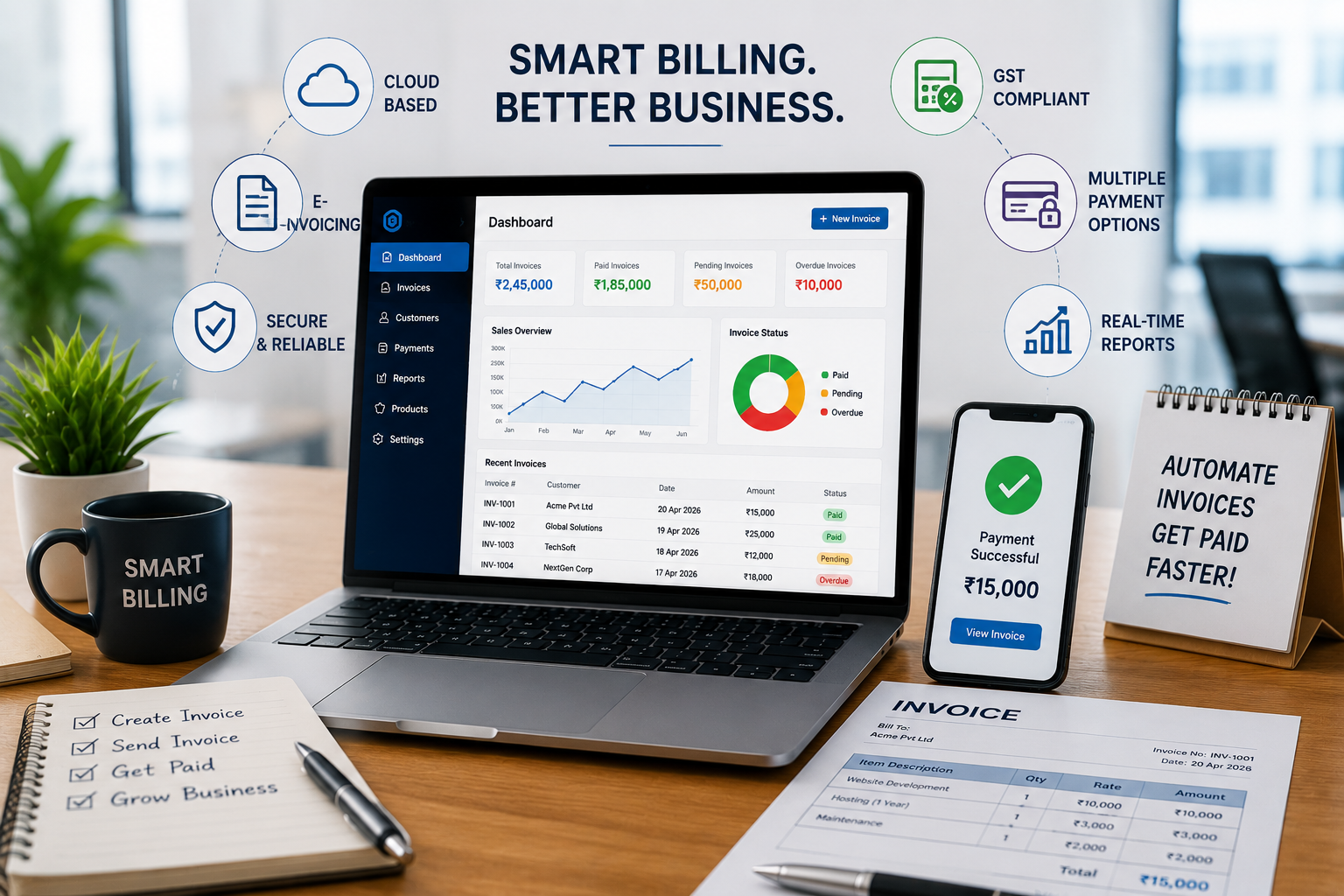
In India and across the world, the way businesses handle billing is undergoing a massive shift. Whether you run a small retail shop in Bengaluru, a mid-sized logistics firm in Mumbai, or a SaaS startup in Hyderabad, the tools you use to raise invoices, collect payments, and manage subscriptions are evolving faster than ever before. The billing software industry is no longer just about generating invoices. Today, it is a full-fledged revenue management system that touches every corner of a business — from product pricing and customer subscriptions to tax compliance and real-time financial reporting. Let us take a close look at the biggest trends shaping billing software in 2026 and what they mean for Indian businesses. Artificial Intelligence is Making Billing Smarter One of the most talked-about developments in billing software right now is the use of Artificial Intelligence. Gone are the days when billing meant simply entering figures into a spreadsheet. Today, AI is doing the heavy lifting. Leading billing platforms are now using AI to automatically detect errors in invoices before they are sent, flag unusual payment patterns, predict which customers are likely to delay payments, and suggest the best pricing strategies based on usage data. For Indian businesses, this is particularly important. Many small and medium enterprises lose revenue every year due to billing errors, missed follow-ups, and manual mistakes. AI-powered tools are helping plug these leaks without needing a dedicated finance team. AI is also being used in collections. Instead of manually chasing overdue payments, businesses can set up automated reminders and payment retry systems that work silently in the background, improving cash flow significantly. Pay as You Use: The Rise of Usage-Based Billing The old model of fixed monthly subscriptions is giving way to something far more flexible. Businesses — especially in the technology and software space — are now charging customers based on how much they actually use a product or service. This model, known as usage-based billing or consumption billing, is gaining enormous traction. Think of it like your electricity or mobile data bill. You pay for what you consume, not a flat rate regardless of usage. Indian startups and SaaS companies are rapidly adopting this approach because it lowers the entry barrier for customers and creates a more honest pricing relationship. A customer who uses the service lightly pays less; a heavy user pays more. This builds trust and reduces churn. However, this model requires billing software that can track usage in real time, apply the right rates, and generate accurate invoices without manual intervention. Platforms that offer this capability are in high demand right now. Cloud-Based Billing is Now the Standard If your billing software still runs on a desktop computer in your office, it is time to make the switch. Cloud-based billing platforms have moved from being an option to being the expected standard for businesses of all sizes. The advantages are clear. You can access your billing data from anywhere, whether you are at the office, working from home, or travelling for a client meeting. Your data is automatically backed up, and updates happen without any manual installation. For Indian businesses that expanded during the remote work era, cloud billing has been a lifesaver. Teams spread across different cities can collaborate on invoices, track payments, and manage client accounts from a single shared platform. Even small businesses and freelancers in India are now switching to cloud billing tools. The earlier hesitation around data security has reduced significantly as providers have strengthened their security practices and compliance standards. GST Compliance and E-Invoicing: A Game Changer for India For Indian businesses, regulatory compliance has always been a challenge. With GST rules evolving regularly and the government pushing for mandatory e-invoicing across more business categories, having billing software that handles compliance automatically is no longer optional — it is essential. E-invoicing mandates require businesses to generate invoices in a standard format and report them to the government portal in real time. Manual processes simply cannot keep up with this requirement. Billing software that integrates directly with the GST portal saves enormous time and reduces the risk of penalties. Modern billing platforms now come with built-in GST rate management, automatic invoice number generation as per government guidelines, e-way bill generation, and direct filing support. This takes the compliance burden off the shoulders of business owners and accountants. This trend is not limited to India. Across Southeast Asia, Europe, and Latin America, governments are introducing similar e-invoicing requirements. Billing software vendors are racing to build compliance features that work across multiple countries. Seamless Integration with Other Business Tools Billing software no longer works in isolation. Today, the best platforms connect smoothly with your accounting software, CRM systems, inventory tools, payment gateways, and even your online store. Imagine raising an invoice the moment an order is placed, having the payment automatically reconciled in your accounts, and updating your inventory in real time — all without anyone doing anything manually. This is what modern billing integration looks like. Indian businesses are increasingly demanding this kind of end-to-end connectivity. Whether it is integrating with Tally for accounting, Razorpay or PayU for payments, or Shopify for e-commerce, billing platforms that offer easy plug-and-play integrations are winning the market. The good news is that many billing tools now offer no-code integration options, meaning you do not need a software developer to connect your systems. Business owners can set up these connections themselves in a matter of minutes. Data Security and Customer Trust Are Now Core Features As billing platforms handle more sensitive financial information, security has moved to the top of the priority list for both vendors and buyers. Customers want to know that their payment details, invoice history, and business data are safe. Leading billing software providers are now building security into the foundation of their platforms. This includes strong data encryption, two-factor authentication, role-based access controls, and regular security audits. For Indian businesses, customer trust is everything. Whether you are billing a corporate client or a first-time buyer, a secure and professional invoicing experience builds confidence in your brand. A billing platform that looks reliable and processes payments without hiccups leaves a lasting impression. Fraud prevention tools are also becoming a standard part of billing software. These tools automatically flag suspicious transactions, unusual invoice patterns, and unauthorised access attempts, helping businesses stay protected without needing a dedicated IT security team. What Indian Businesses Should Look for in Billing Software With so many options available in the market, choosing the right billing software can feel overwhelming. Here are the key things to keep in mind: • GST and e-invoicing compliance built directly into the platform • Cloud access so your team can work from anywhere • Easy integration with your existing tools like accounting software and payment gateways • Automation for recurring invoices, payment reminders, and follow-ups • Support for multiple currencies if you deal with international clients • Clear and simple reporting so you always know where your money stands • Reliable customer support in case you run into issues The Road Ahead The billing software market is growing at a remarkable pace, and for good reason. As businesses become more digital, the demand for smart, automated, and compliant billing tools will only increase. For Indian entrepreneurs and business owners, this is actually great news. The tools that were once available only to large corporations are now accessible to even a one-person freelancing business. The playing field has levelled, and the right billing software can genuinely help you get paid faster, stay compliant, and focus more time on growing your business. Whether you are just starting out or looking to upgrade your existing setup, 2026 is an excellent time to review your billing processes and invest in a platform that is built for the future.