
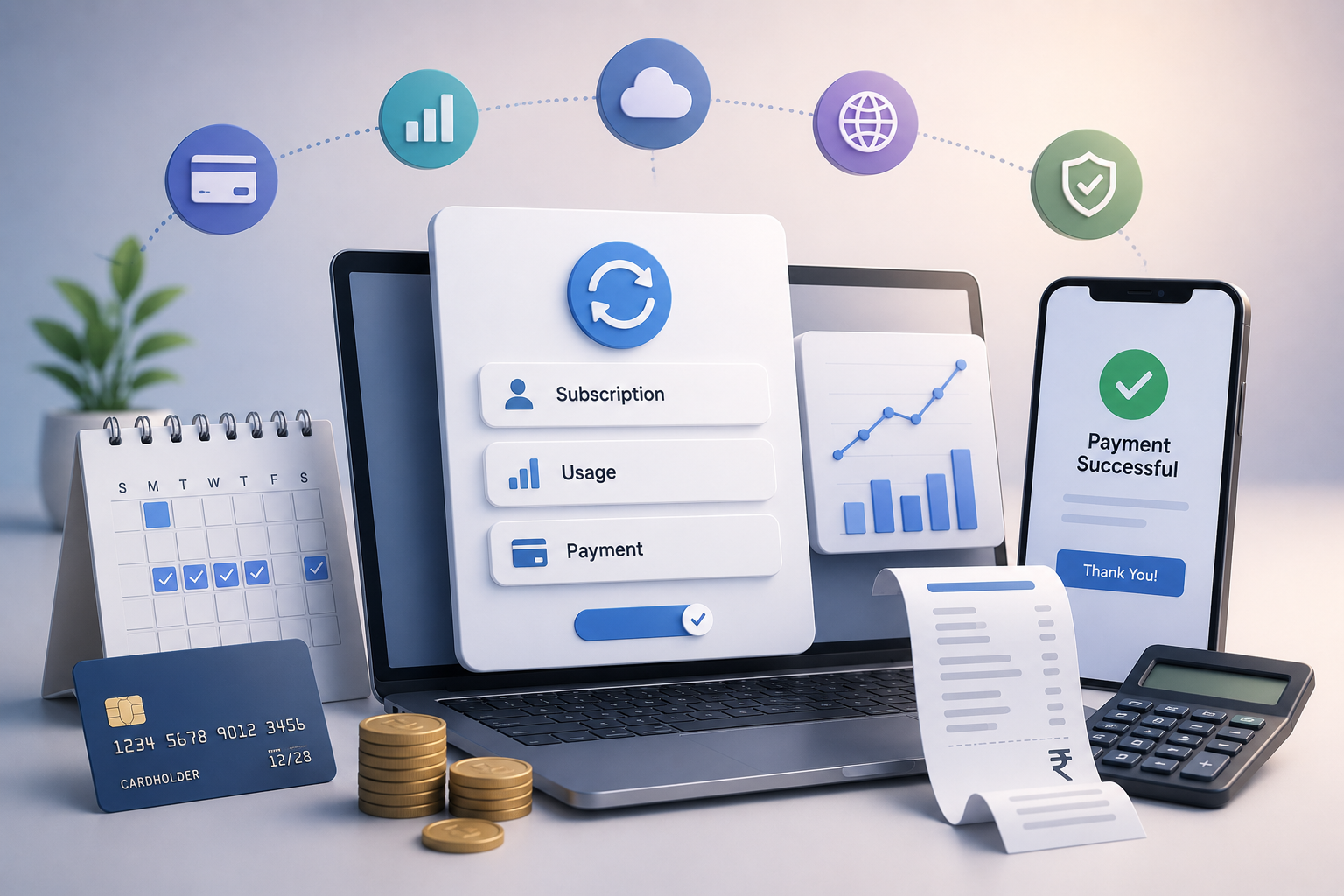
Subscription Billing Is Getting a Glow-Up — Here's What's Actually Changing Remember when "billing" just meant charging someone the same amount every month and hoping the credit card didn't expire? Those days are pretty much gone. If you're running a subscription business in 2026, your billing system is doing a lot more heavy lifting than it used to — and honestly, it kind of has to. We talk to a lot of founders and finance folks at Altos, and the same themes keep coming up. So instead of another dry "state of the industry" report, here's what we're actually seeing on the ground. People don't want to pay for stuff they don't use Flat monthly fees are losing their appeal, especially for SaaS and anything API-related. Customers have gotten used to paying for what they actually consume — think cloud bills, AI tool credits, that kind of thing. So now a lot of pricing is a mashup: a base fee plus usage on top, maybe some overage tiers or credits thrown in. Sounds simple in theory. In practice, it means your system needs to track usage in real time, match it up against whatever contract terms apply, and spit out an invoice that doesn't make your customer go "wait, what is this charge?" That last part trips up more companies than you'd think. AI quietly became a big part of billing Not the flashy chatbot kind of AI — the boring, useful kind that's working in the background. A good example is failed payments. Instead of just retrying a declined card three days later like clockwork, smarter systems are starting to predict which failures are likely to recover on their own and which ones need a nudge — a different payment method prompt, a well-timed email, whatever actually works for that person. It's also getting better at catching weird stuff before it becomes a problem: pricing misconfigurations, sketchy usage spikes, billing errors that would've otherwise shown up as an angry support ticket. And on the finance side, forecasting revenue is starting to lean less on guesswork-in-a-spreadsheet and more on models that actually account for churn patterns and plan changes. Nobody wants to wait until "end of cycle" anymore There's a growing expectation that if you use something, it shows up almost immediately — not at the end of the month when the invoice finally generates. That's pushing billing toward systems that react to events as they happen instead of running one big batch job overnight. It's not just a nice-to-have for customers, either. Faster billing means faster visibility into actual revenue, which matters a lot if you're trying to manage cash flow and not get surprised at quarter-end. "One big billing platform" is starting to feel outdated More companies are piecing together their billing stack instead of buying one giant all-in-one system — a metering tool here, a tax engine there, different payment processors depending on the region. It gives you way more flexibility to test new pricing ideas without ripping out your entire infrastructure every time. The catch? All those pieces have to actually talk to each other without breaking. That's a big reason why good APIs and reliable integrations matter so much more than they used to. Taxes are a mess, and automation is the only sane answer If you sell internationally, you already know the pain — VAT here, GST there, some new digital services tax popping up in a country you barely have customers in. Trying to manage that by hand is basically a part-time job nobody wants. So tax handling is shifting from "thing we deal with later" to "thing the billing system should just handle." Jurisdiction detection, correct rates, reports that are actually ready for filing — that's becoming table stakes, not a bonus feature. Confusing invoices quietly kill more subscriptions than bad products do Here's something that doesn't get talked about enough: a lot of churn isn't about the product at all. It's about someone getting a charge they didn't expect, not understanding their usage, or just giving up trying to figure out their bill. That's why self-serve billing portals are becoming a bigger deal — places where customers can actually see what they're being charged for, track usage, and make changes themselves instead of emailing support. It sounds like a small thing, but clear billing builds trust, and trust is what keeps people subscribed. Billing is starting to blur into "actual finance" A few companies are taking this even further by baking lending or flexible payment terms right into their billing flow — basically letting customers pay over time without needing a separate loan or financing relationship. It's still early days for this, but it's a sign of where things might be headed: billing systems becoming less of a "charge the card" tool and more of a real financial relationship with customers. So what does this actually mean for you? If there's one thread tying all this together, it's that billing isn't just back-office plumbing anymore. It shapes how flexible your pricing can be, how fast you can expand into new markets, how much revenue you're quietly losing to failed payments, and how much customers trust the numbers on their invoice. A few honest questions worth asking about your own setup: Can you launch a new pricing plan without an engineer spending two weeks on it? Are you actually seeing revenue in real time, or finding out what happened a month later? Is tax compliance handled automatically, or is someone manually checking rates for every new country? And when a customer looks at their bill, do they trust it — or does it create more questions than it answers? At Altos, this is the stuff we think about constantly. Billing tech is moving fast, but what actually matters hasn't changed: be accurate, be clear, and don't make people work to understand what they're paying for.