How a CRM System Helps You Never Miss a Lead — From First Enquiry to Final Closure
In today’s fast-moving business world, every single lead is like a golden opportunity. If you don’t grab it at the right time, it simply disappears. Whether you are running a small startup, a growing retail shop, or a large service-based company, the biggest enemy of growth is "forgetting" to follow up. You might be spending a lot of money and time on marketing, but if you don't have a system to track the people who enquire, you are essentially letting money leak out of your pocket.
This is exactly where a CRM (Customer Relationship Management) system comes into play. It is not just a software; it acts like a digital personal assistant that manages your entire business relationship from the first "Hello" to the final payment. Here is a detailed look at how a CRM ensures you never lose a single lead again.
1. No More "I Forgot to Reply"
In the traditional way of doing business, enquiries come from everywhere—WhatsApp, Instagram DMs, Facebook comments, website forms, and direct phone calls. When you are busy managing operations, it is very easy to miss a notification or forget to reply to a message received late at night.
A CRM solves this by acting as a single "central hub." The moment someone sends an enquiry on any platform, the CRM automatically records it. You don’t have to check five different apps to see who messaged you. Every "What is the price?" or "I am interested in your services" is saved in one clean list immediately. Because everything is in one place, you can reply much faster. In business, speed is everything. If you reply in five minutes while your competitor takes five hours, the customer is already yours.
2. Spotting the "Hot" Leads and Prioritizing
Not everyone who asks a question is ready to buy right now. Some people are just "window shopping" or checking prices for the future, while others are ready to make a payment today. If you treat everyone the same, you might waste your best energy on someone who isn't serious.
A CRM helps you "score" or tag your leads based on their behavior:
Hot Leads: These are people who have visited your pricing page multiple times, asked for bank details, or requested a final quote.
Warm Leads: People who have downloaded your brochure or joined your email list.
Cold Leads: People who just asked a general question and haven't engaged further.
By knowing who is most serious, you and your sales team can focus your time on the "Hot" leads first. This ensures that the people most likely to give you business get the best attention immediately.
3. The Power of Automatic Follow-Ups
Statistics show that most sales don't happen during the first conversation. Usually, it takes five to six follow-ups before a customer feels confident enough to buy. However, most business owners give up after just one or two tries because they feel they are "disturbing" the customer or they simply forget.
A CRM acts as your "Silent Salesman." It can send automatic, polite reminders. For example, if a lead doesn't reply to your initial quote, the CRM can send a message after two days saying, "Hi, just checking if you had any questions about the proposal." This keeps the conversation alive in the background while you focus on other important work. It makes your business look professional and persistent without you having to manually type every message.
4. Visualizing Your Full Sales Pipeline
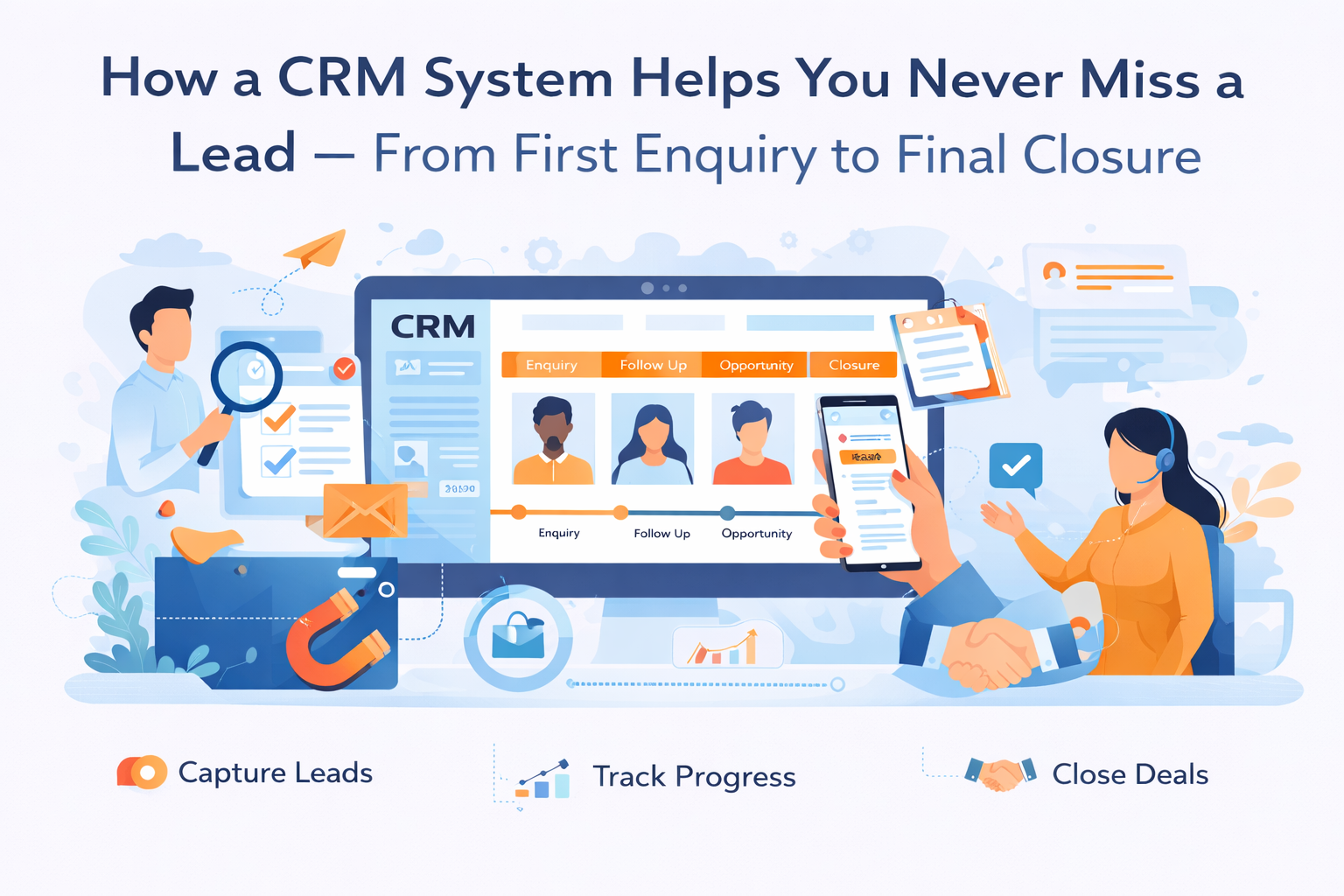
Managing leads in a notebook or a basic Excel sheet is confusing. You can't easily see the "big picture." A CRM gives you a visual chart—often called a pipeline—that shows exactly where every potential customer is standing.
You can see:
New Enquiries: People who just contacted you.
Under Discussion: People you are currently talking to or sending samples to.
Negotiation: People who are discussing the final price.
Closed/Won: People who have made the payment.
When you can see your business progress this clearly, you can identify "bottlenecks." For example, if you see 50 people are stuck in the "Negotiation" stage, you know you need to offer a small discount or a better deal to close those sales. It takes the guesswork out of your daily operations.
5. Data-Driven Decisions: Know Which Ad is Working
Every business spends some money on marketing—whether it’s through social media videos, newspaper ads, or Google. But do you know which one is actually bringing you profit?
A CRM tracks the "source" of every lead. It can tell you, "You got 20 leads from Instagram this month, but 10 leads from your blog converted into high-value sales." With this information, you can stop wasting money on marketing that doesn't work and spend more on the channels that actually bring in real customers. It helps you grow your business using facts, not just feelings.
6. Building Long-Term Loyalty
A CRM is not just for the first sale; it is for life. Once a lead becomes a customer, the CRM stores their history—what they bought, when they bought it, and what their preferences are. This allows you to reach out to them months later with personalized offers. For example, if a customer bought a product from you a year ago, you can send them a "Happy Anniversary" discount. This kind of personal touch turns a one-time buyer into a loyal, lifelong customer.
Conclusion: Stop Watching Your Leads Fade Away
In 2026, the competition is higher than ever. Every lead you ignore or forget is a direct gift to your competitor. Using a CRM is the smartest way to move from a "struggling" business to a "successful" brand. It removes the stress of using messy notebooks, eliminates human error, and gives you a clear, professional path to success.
Are you ready to stop losing leads and start growing your revenue? Contact us today for a free consultation. We will help you choose and set up the perfect CRM tailored to your business needs, so you can turn every enquiry into a permanent customer!